Quick note: Some links are affiliate links, so we may earn a small commission (at no extra cost to you). Info only, not medical advice, check with your healthcare provider.
Supplements for menopause are everywhere, and most of them are noise. Every ad promises “balance,” “reset,” or “hormone harmony,” and yet you’re still waking at 2 AM, dragging through the day, and wondering which bottle, if any, is actually worth your money.
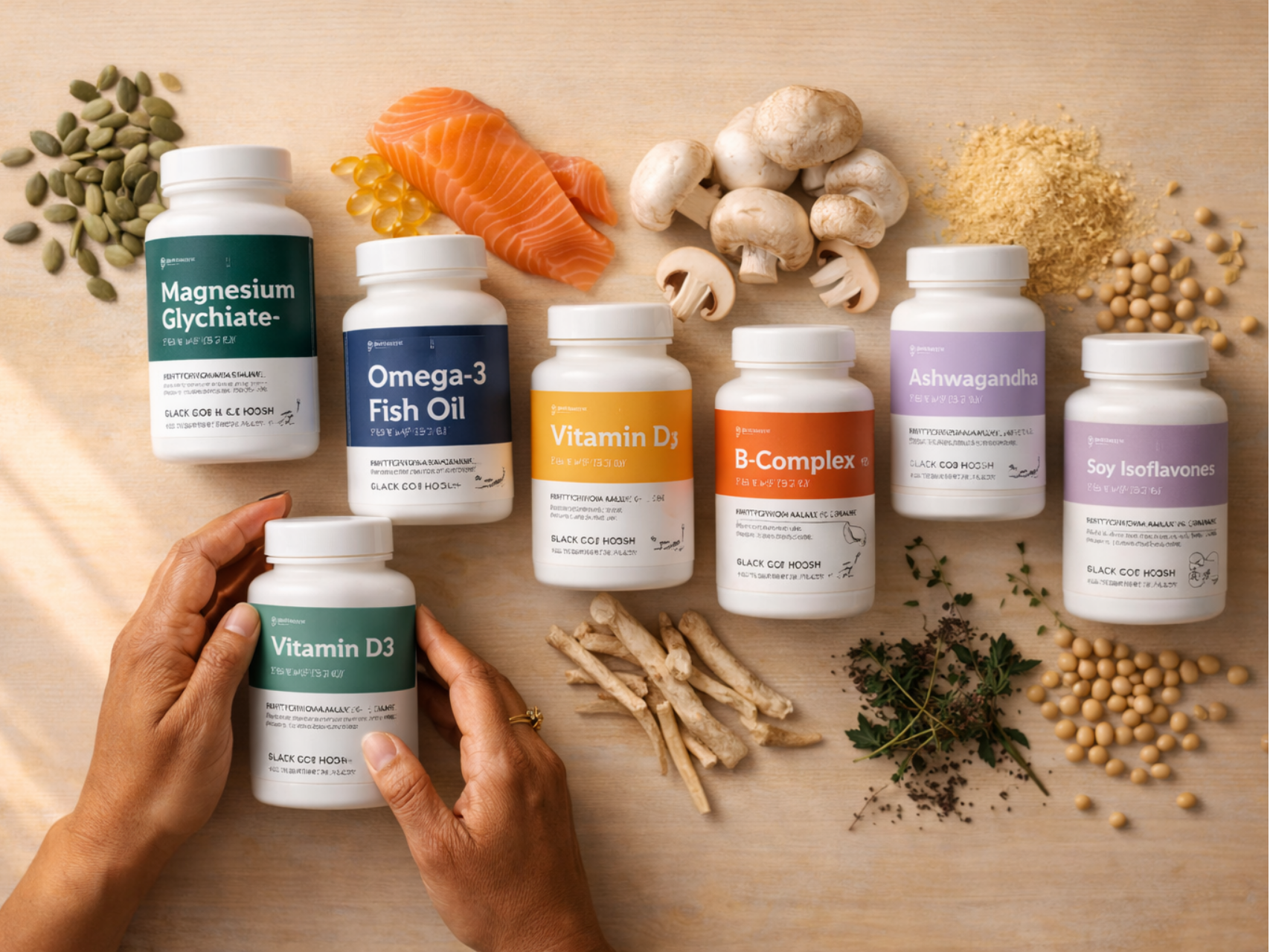
This guide cuts straight to seven supplements that have the most evidence or real-world traction for perimenopause and menopause symptoms. This is not a prescription. It’s a starting point. You’ll see what each one actually does, how it can help, and where it fits in your overall plan.
Always clear new supplements with your own provider, especially if you take medications or have chronic conditions.
1. Magnesium Glycinate: Your Nervous System’s Best Friend
Best for: Sleep, “tired but wired” nights, muscle tension, anxious body
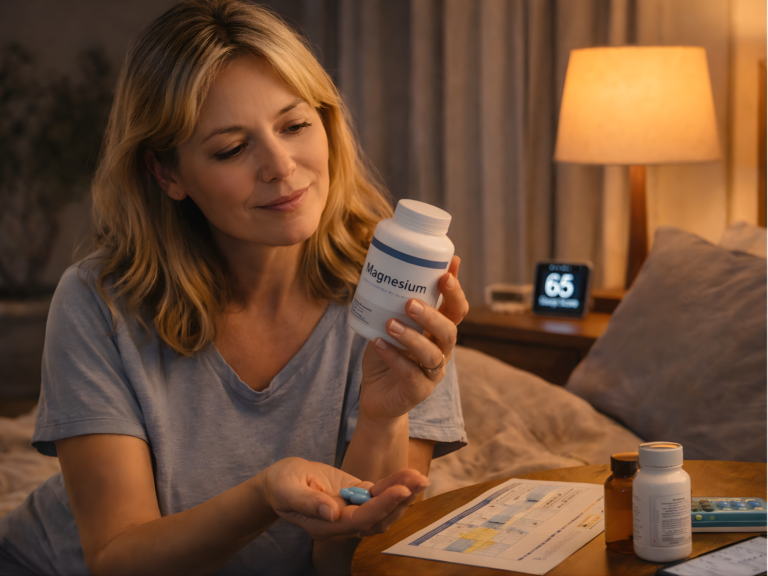
Magnesium is involved in hundreds of reactions in your body, including muscle relaxation, nervous system regulation, and energy production. During perimenopause and menopause, sleep often implodes just as hot flashes, mood swings, and racing thoughts ramp up. That’s why magnesium shows up in nearly every reputable menopause supplement list.
The form matters enormously. Most cheap magnesium, the kind you’ll find in drugstore multivitamins, is magnesium oxide. Your body barely absorbs it, and it frequently causes diarrhea. Magnesium glycinate, also called magnesium bisglycinate, is different. It’s bound to glycine, an amino acid that has its own calming effect on the nervous system. It absorbs better, and it’s gentler on your gut than oxide or citrate. And it supports GABA and melatonin, which are the chemicals your brain uses to wind down and actually sleep.
Clinical and observational data suggest that magnesium supplementation can improve sleep duration and quality, especially in people struggling with poor sleep. Menopause-focused clinicians like Dr. Louise Newson highlight magnesium as a core tool for sleep and anxiety during hormonal transition.
Most women take 200 to 400mg of elemental magnesium glycinate in the evening, usually with a small snack or with dinner. It’s not a one-night magic pill. You need to take it consistently for two to four weeks to see the full effect. Our recommended magnesium glycinate
For the full breakdown on why magnesium works so well for perimenopause sleep, read Magnesium for Sleep During Menopause.
2. Omega-3 Fish Oil: Mood, Brain, and Inflammation
Best for: Low mood, brain fog support, joint pain, long-term heart and brain health
Omega-3 fatty acids, specifically EPA and DHA, are structural components of brain cell membranes and play a significant role in anti-inflammatory pathways throughout your body. Several reviews suggest that omega-3s can improve depressive symptoms and support overall mood, particularly in women and in people with higher baseline inflammation.
For menopause specifically, omega-3s are often recommended as support for mood changes and brain fog. Some data suggest small benefits for hot flashes and night sweats, but the results are mixed enough that you shouldn’t rely on omega-3s for hot flash relief alone. Even when the hot flash data are underwhelming, though, the cardiovascular and brain health benefits often justify omega-3 supplementation for midlife women. Heart disease and cognitive decline risk both rise after estrogen declines, and omega-3s address both.
Most women take 1,000 to 2,000mg of combined EPA and DHA per day. Pay attention to the label here. You want 1,000 to 2,000mg of actual EPA and DHA, not just “fish oil.” Those are not the same number. Take it with food to reduce fishy burps or nausea. Triglyceride or re-esterified triglyceride forms tend to be better tolerated than ethyl ester forms. Our recommended omega-3 supplement
3. Vitamin D3: Bones, Immunity, and Mood
Best for: Bone density, fracture risk, immune support, possibly mood
Vitamin D is crucial for calcium absorption and bone remodeling. Postmenopausal women are at increased risk of bone loss and fractures, and low vitamin D status makes that significantly worse. Many midlife women are deficient due to indoor lifestyles, northern latitude, skin coverage, or darker skin pigmentation, which reduces how efficiently your body produces vitamin D from sunlight.
The research is clear on this. Adequate vitamin D plus calcium significantly helps maintain bone density and reduce fracture risk in postmenopausal women. Observational studies also link low vitamin D with fatigue and low mood, though the causality isn’t always clear. Even if the mood connection is less direct than the bone connection, vitamin D deficiency is common enough in midlife women that supplementation makes sense for most.
Most women take 2,000 to 4,000 IU of vitamin D3 daily, adjusted based on blood levels. Ideally, get a 25(OH)D blood test and aim for roughly 30 to 50 ng/mL, which is the range many experts recommend. Vitamin D is often paired with magnesium because they work together in multiple pathways, and taking them together improves absorption and effectiveness of both. Our recommended vitamin D3 supplement
4. B-Complex with Methylated B Vitamins: Energy and Cognitive Support
Best for: Low energy, brain fog, stress support, homocysteine regulation
B vitamins, especially B6, B9 (folate), and B12, are essential for energy production in your mitochondria, red blood cell formation, methylation pathways and homocysteine regulation, and neurotransmitter production, including serotonin and dopamine. Dr. Louise Newson and other menopause clinicians specifically highlight B12 and other B vitamins for women dealing with fatigue, brain fog, or anyone following vegan or vegetarian diets, where deficiency is common and directly impacts energy and cognition.
Using a methylated B-complex, which means methylfolate and methylcobalamin rather than synthetic folic acid and cyanocobalamin, can be particularly helpful for women with MTHFR gene variants. These women don’t convert synthetic folic acid efficiently, and the methylated forms bypass that issue entirely.
Most women take a balanced B-complex providing roughly 100 to 300% of daily values. You don’t need extreme megadoses unless you’re working with a provider who’s supervising higher therapeutic doses for a specific reason. B vitamins are often taken in the morning with food because they can be mildly stimulating for some women. They’re particularly important if labs show low B12 or folate, or if you have elevated homocysteine, which is a cardiovascular risk marker that B vitamins help regulate. Our recommended B-complex supplement
5. Ashwagandha Extract: Stress and “Wired” Nervous System
Best for: Chronic stress, anxiety, trouble winding down, non-hormonal sleep support
Ashwagandha (Withania somnifera) is an adaptogen often used for stress and sleep. A 2021 randomized, double-blind, placebo-controlled trial found that standardized ashwagandha extract improved sleep onset latency, total sleep time, and overall sleep quality in adults with insomnia. Other clinical work and reviews suggest benefits for perceived stress and anxiety.
For midlife women, this matters because perimenopause often lands on top of heavy caregiving, career demands, and life stress that was already running high. Cortisol is elevated. Hormone changes pour gasoline on that fire. Ashwagandha can help lower perceived stress and may reduce cortisol in some women. It makes it easier to transition into sleep at night, especially when combined with magnesium. Many women describe it as turning down the volume on the constant hum of stress that makes rest feel impossible.
Most women take 300 to 600mg per day of standardized root extract. Look for products that specify KSM-66, Sensoril, or something similar, with clear milligram amounts and standardization percentages on the label. It’s often taken in the evening, or split into two doses, morning and evening. It’s not ideal during pregnancy or for women with certain autoimmune or thyroid conditions, so check with your clinician first if either of those applies. Our recommended ashwagandha supplement
If your nervous system feels stuck in crisis mode, read Nervous System Dysregulation: Why Midlife Women Can’t Rest for the full picture of what’s happening and how to address it.
6. Black Cohosh: Hot Flashes (With Caveats)
Best for: Some women with hot flashes and night sweats who can’t or won’t use HRT
Black cohosh is one of the most heavily marketed “menopause herbs,” but the evidence is genuinely mixed. A large, double-blind randomized placebo-controlled trial found no significant difference between black cohosh and placebo for hot flashes. Some smaller studies and observational reports show modest reductions in hot flash frequency or severity. Because the results are inconsistent, and because black cohosh doesn’t act like estrogen in the body, it’s best understood as something that may help some women but is not a guaranteed fix.
Most women who try it use standardized extracts at doses around 20 to 40mg twice daily, depending on the specific product. It’s usually tried for eight to twelve weeks to assess whether it’s making a difference. It’s not recommended for women with liver disease, and any signs of liver issues while taking it need urgent medical evaluation. Our recommended black cohosh supplement
7. Soy Isoflavones: Gentle Estrogen-Like Support
Best for: Mild hot flashes, night sweats, mood support in women who can’t use HRT
Soy isoflavones are phytoestrogens, which are plant compounds that weakly bind to estrogen receptors in your body. Meta-analyses and randomized trials suggest small but real improvements in vasomotor symptoms, which means hot flashes and night sweats, and sometimes sleep and mood as well.
The key nuance here is that the effects are typically modest, not HRT-level. You’re not going to eliminate severe hot flashes with soy isoflavones the way you might with estrogen therapy. But for women who can’t take HRT or prefer to avoid it, soy isoflavones offer a plant-based option with a low risk profile. Benefits tend to be more consistent in women whose diets were low in soy before supplementation, which applies to most Western women.
Most women take 40 to 80mg per day of soy isoflavones in supplement form, or a combination of supplements and whole soy foods like tofu, tempeh, and edamame. Evaluate your response over eight to twelve weeks. Soy isoflavones are often used by women who prefer plant-based, low-risk options and cannot or do not want to take estrogen. Our recommended soy isoflavone supplement
How to Think About Supplements in Your Overall Plan
These recommended supplements for menopause are tools, not magic. They work best when layered on top of the basics: sleep hygiene, stress management, movement, and nutrition. If your sleep is being destroyed by severe night sweats, magnesium and ashwagandha will help your nervous system, but you may still need HRT to address the root hormonal cause. If your brain fog is severe, B vitamins and omega-3s support your brain, but you might also need progesterone or estrogen to restore the fuel your brain is missing.
Read Start Here: The Complete Guide to Perimenopause & Menopause to understand how supplements fit into the bigger picture of managing symptoms.]Start with one or two supplements at a time. Give each one two to four weeks before adding another. Pay attention to what shifts. It’s good to note that not all of these supplements for menopause work for every woman, and that’s completely normal. Your biochemistry is unique. What your friend swears by might do nothing for you, and vice versa. The goal is to find what your body actually responds to.
And if you’re on medications or managing chronic conditions, run your supplement plan by your provider before starting. Some supplements interact with medications. Some need to be timed carefully around other things you’re taking. A two-minute conversation now prevents problems later.
Continue reading:
Magnesium for Sleep During Menopause
Nervous System Dysregulation: Why Midlife Women Can’t Rest
Brain Fog in Perimenopause: It’s Not Early Dementia
Start Here: The Complete Guide to Perimenopause & Menopause
These statements have not been evaluated by the FDA. Supplements are not intended to diagnose, treat, cure, or prevent disease. Consult your healthcare provider before starting new supplements.
Research Sources:
Clinical Trials.gov – 12-Week Magnesium Supplementation on Perimenopause
https://clinicaltrials.gov/study/NCT07235878
Midi Health – Magnesium for Sleep During Menopause: What You Need to Know
https://www.joinmidi.com/post/magnesium-for-sleep
NIH/PubMed Central – Association of Magnesium Intake with Sleep Duration and Sleep Quality
https://pmc.ncbi.nlm.nih.gov/articles/PMC8996025/
Dr. Louise Newson – Magnesium and Hormone Health
https://www.drlouisenewson.co.uk/knowledge/magnesium-and-hormone-health
The Menopause Dietitian – Magnesium and Sleep: Does It Help?
https://www.themenopausedietitian.co.uk/magnesium-and-sleep-does-it-help/
NIH/PubMed Central – Omega-3 Fatty Acids for Major Depressive Disorder Associated with Menopause
https://pmc.ncbi.nlm.nih.gov/articles/PMC3195360/
Midi Health – Non-Hormonal Treatment for Menopause
https://www.joinmidi.com/post/non-hormonal-treatment-for-menopause
Healthline – 13 Best Menopause Supplements and Vitamins for 2025
https://www.healthline.com/health/menopause/vitamins-for-menopause
**** Omegor – Omega-3 for Menopausal Women
https://www.omegor.com/en/blogs/womans-wellness/menopause-syntoms-depression-hot-flashes
**** Women’s Mental Health – Are Omega-3 Fatty Acids Effective for Menopausal Vasomotor Symptoms?
https://womensmentalhealth.org/posts/research-from-the-cwmh-are-omega-3-fatty-acids-effective-for-menopausal-vasomotor-symptoms/
**** NIH/PubMed Central – The Effects of Combined Calcium and Vitamin D on Bone Health
https://pmc.ncbi.nlm.nih.gov/articles/PMC12506016/
PubMed – Vitamin D and Bone Health in Postmenopausal Women
https://pubmed.ncbi.nlm.nih.gov/12737713/
Oprah Daily – Menopausal? You Probably Need These Supplements
https://www.oprahdaily.com/life/health/a70098355/best-menopause-supplements-magnesium-vitamin-d/
**** Dr. Louise Newson – B Vitamins, Menopause and Hormone Health
https://www.drlouisenewson.co.uk/knowledge/b-vitamins-menopause-and-hormone-health
**** Bonafide Health – B Vitamins for Menopause Symptoms
https://hellobonafide.com/blogs/news/b-vitamins-for-menopause
**** PLOS ONE – Effect of Ashwagandha (Withania Somnifera) Extract on Sleep Quality in Adults with Insomnia
https://journals.plos.org/plosone/article?id=10.1371%2Fjournal.pone.0257843
NIH – Ashwagandha: Is It Helpful for Stress, Anxiety, or Sleep?
https://ods.od.nih.gov/factsheets/Ashwagandha-HealthProfessional/
NMI Health – Ashwagandha: A Review of Clinical Use and Efficacy
https://www.nmi.health/ashwagandha-a-review-of-clinical-use-and-efficacy/
Clinical Trials.gov – The Impact of Ashwagandha on Perceived Stress, Sleep and Food Cravings
https://www.clinicaltrials.gov/study/NCT05430685
ASCO Publications – Phase III Double-Blind, Randomized, Placebo-Controlled Crossover Trial of Black Cohosh in the Management of Hot Flashes
https://ascopubs.org/doi/10.1200/JCO.2005.05.4296
University of Illinois – Phase III Double-Blind, Randomized, Placebo-Controlled Crossover Trial of Black Cohosh
https://experts.illinois.edu/en/publications/phase-iii-double-blind-randomized-placebo-controlled-crossover-tr
NIH/PubMed Central – Herbal Products Used in Menopause and for Gynecological Disorders
https://pmc.ncbi.nlm.nih.gov/articles/PMC8708702/
Healthline – Black Cohosh: Benefits, Dosage, Side Effects, and More
https://www.healthline.com/health/food-nutrition/black-cohosh
NIH/PubMed Central – Effects of Soy Isoflavones on Menopausal Symptoms in Women
https://pmc.ncbi.nlm.nih.gov/articles/PMC12296567/
NIH/PubMed Central – Effect of Soy Isoflavones Supplement on Climacteric Symptoms
https://pmc.ncbi.nlm.nih.gov/articles/PMC5449379/
PubMed – Randomized Controlled Trial of Whole Soy and Isoflavone
https://pubmed.ncbi.nlm.nih.gov/24149925/
ScienceDirect – Effect of Magnesium Supplementation on Women’s Health and Well-Being
https://www.sciencedirect.com/science/article/pii/S2352364621000079