

Recommended Supplements
Affiliate Disclaimer: This post may contain affiliate links. If you purchase through these links, Top Women’s Wellness may earn a small commission at no extra cost to you. We only recommend products we genuinely believe support midlife women.
We use everything on this page. That’s the baseline. If it’s here, it’s because we’ve researched it, tried it, and it’s referenced in our articles for a reason, not because someone offered us a commission to talk about it.
Every product on this list was chosen specifically for midlife women navigating perimenopause and menopause alongside the kind of chronic stress that comes with caregiving, working, and holding everyone else’s life together while your body rewrites its own rules. We looked for the strongest evidence, the cleanest formulations, and the most consistent real-world results from women actually living this.
Nothing on this page is a random affiliate pick. If we wouldn’t take it ourselves, it’s not here.
Supplements We Trust
There are roughly ten thousand supplement lists on the internet telling you to take everything all at once and then wondering why your stomach is a disaster by day three. This is not that.
Start with one or two. Give each one two to four weeks before adding another. Your body needs time to respond, and you need to be able to tell what’s actually working versus what’s just expensive urine. More is not better. Targeted is better.
Every supplement below is one we’ve referenced in our articles because the evidence supports it specifically for women in perimenopause and menopause, not because it’s trending on TikTok. We chose the specific brands and forms listed here based on bioavailability (meaning your body can actually absorb and use it), clean formulations without unnecessary fillers, and consistent feedback from women who are living this, not influencers who are not.
If you’re dealing with caregiver burnout, nervous system overload, or the kind of fatigue that sleep doesn’t fix, start with magnesium. If your energy is the main issue, get your iron and B12 levels checked before you supplement. If everything feels like too much right now, just pick one. One is enough to start.
1. Magnesium Glycinate: For Sleep and Nervous System Support
Best for: Wired-but-tired nights, muscle tension, 3am waking, the kind of anxiety that lives in your body more than your thoughts.
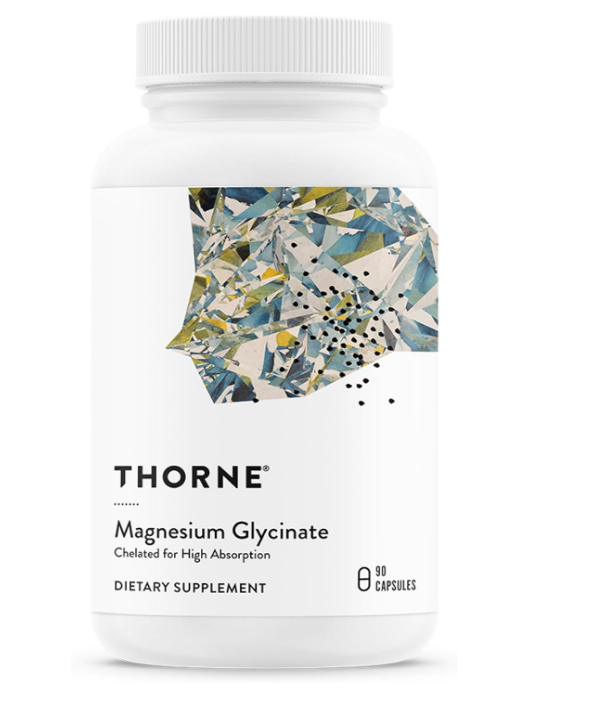
Magnesium Glycinate
THORNE Magnesium Glycinate – 90 Servings
THORNE’s Magnesium Glycinate delivers highly absorbable chelated magnesium designed to support restful sleep, muscle relaxation, heart health, and metabolism. Unlike cheaper forms of magnesium, the glycinate chelate form is gentler on the stomach and better utilized by the body. Each serving is gluten, dairy, and soy-free, and the product is third-party certified for purity and potency, a hallmark of the trusted THORNE brand.
If you take one supplement from this entire page, make it this one. Magnesium glycinate is the most absorbable form of magnesium and one of the single most impactful additions for women in perimenopause and menopause. It supports deep sleep, calms an overactivated nervous system, and works with your body’s GABA and melatonin pathways, which are exactly the systems that hormonal shifts are disrupting.
Most women notice a difference within two to three weeks. Sleep gets deeper. The 3am waking becomes less frequent or less wired when it does happen. That background hum of tension in your shoulders and jaw starts to ease. It’s not a miracle. It’s a mineral your body is almost certainly running low on, and replenishing it lets your nervous system do what it’s been trying to do.
Take 200 to 400mg of elemental magnesium glycinate in the evening with food. Start at 200mg for the first week. If you tolerate it well, move to 400mg.
We break down the full science behind why this works in Magnesium for Sleep During Menopause: What Actually Works.
2. Omega-3 Fish Oil: For Mood, Brain Fog, and Inflammation
Best for: Low mood that isn’t quite depression, brain fog that makes you feel like you’re thinking through wet cement, joint discomfort that showed up out of nowhere, and long-term heart and brain protection.
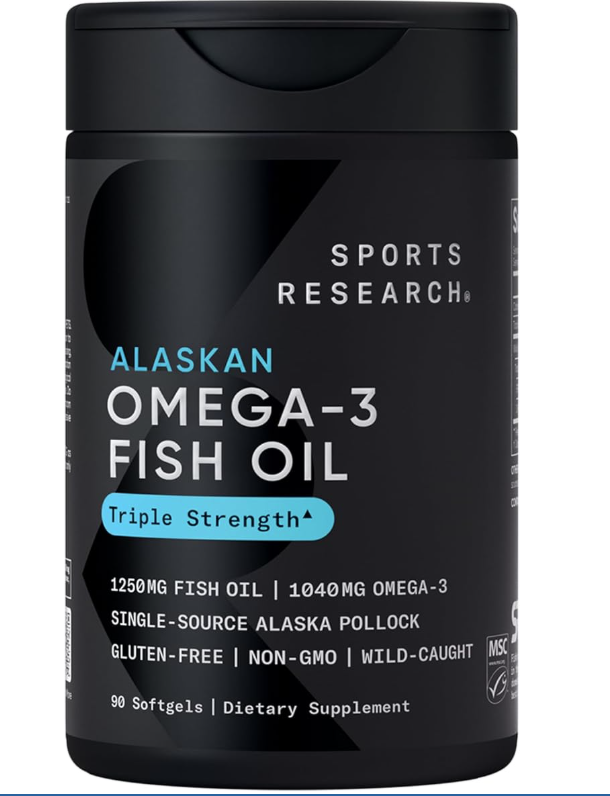
Omega-3 Fish Oil
Sports Research® Triple Strength Omega-3 Fish Oil 1250
Sourced from wild-caught Alaskan Pollock, this triple-strength fish oil delivers over 1,040mg of EPA and DHA essential fatty acids in just one softgel per day. Distilledd for purity and ultra-concentrated to 80%+ omega-3 content, it comes in the preferred triglyceride (rTG) form for better absorption with no fishy taste, no fillers, and no artificial flavors. MSC Certified Sustainable, Non-GMO, Soy-Free, and Gluten-Free. 90 softgels per bottle. Rated 4.7 stars by over 57,000 customers.
This one doesn’t get the flashy reputation that magnesium does, but it’s doing critical work under the surface. EPA and DHA, the two omega-3 fatty acids that matter most here, are structural components of your brain cell membranes. They’re literally part of what your brain is built from.
As estrogen declines during perimenopause and menopause, your brain loses some of the protection it used to have. Mood regulation gets shakier. Inflammation increases. That foggy, slow-processing feeling that makes you read the same email three times isn’t just stress. It’s partly your brain running without the support it’s used to. Omega-3s help fill that gap by reducing systemic inflammation, supporting neurotransmitter function, and protecting the structural integrity of brain cells that are navigating a hormonal transition they didn’t ask for.
The cardiovascular benefits are worth mentioning too. Heart disease risk increases significantly after menopause, and omega-3s are one of the most well-documented supports for long-term heart health. This is one of those supplements where the benefits compound quietly over months, not the kind of thing you feel on day three, but the kind of thing that’s protecting you at a level you’ll be grateful for later.
Take 1,000 to 2,000mg of combined EPA and DHA daily with food. Check the label carefully. The total fish oil amount on the front of the bottle is not the same as the combined EPA and DHA amount, which is usually listed in the supplement facts on the back. You want 1,000 to 2,000mg of EPA plus DHA specifically, not just “fish oil.”
3. Vitamin D3: For Bones, Immunity, and Mood
Best for: Bone density protection, immune support, fatigue that seems out of proportion to your sleep, and the kind of low mood that feels like someone turned the brightness down on everything.
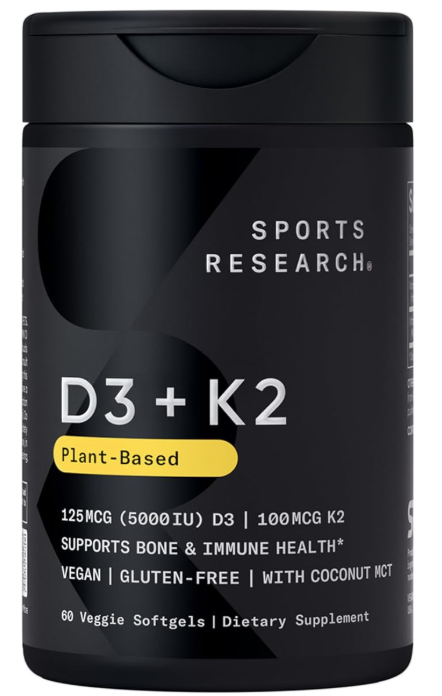
Vitamin D3
Sports Research® Vitamin D3 + K2 with Coconut MCT Oil: 60 softgels | 5,000 IU Vitamin D3 + 100mcg MK-7 Vitamin K2 | Vegan Certified · Non-GMO · Soy Free
Most women take Vitamin D3 alone and stop there. The problem is that D3 without K2 can push calcium into circulation without directing it where it actually belongs, in your bones. This two-in-one formula pairs 5,000 IU of plant-based D3 with MK-7 Vitamin K2, the form of K2 best absorbed by the body. The K2 acts as a traffic director, guiding calcium to your bones and away from soft tissue.
Vitamin D is one of those deficiencies that hides in plain sight. You’re tired, your mood is flat, your joints ache, and you assume it’s all perimenopause and menopause. And it might be. But it also might be that your vitamin D levels are in the basement, making every hormonal symptom worse than it needs to be.
Deficiency is extremely common in midlife women, especially if you spend most of your day indoors, live in a northern climate, or wear sunscreen consistently (which you should for about twenty other reasons). Vitamin D is technically a hormone precursor, not just a vitamin, and it influences far more systems than most people realize. It plays a direct role in bone density, immune function, mood regulation, and energy production. When estrogen declines during perimenopause and menopause, bone loss accelerates. Vitamin D is one of your most important tools for slowing that process down.
Here’s the thing about this one: you can actually test for it. Before you start supplementing, ask your doctor to check your 25-hydroxyvitamin D level. It’s a simple blood draw. If you’re deficient, supplementing makes a noticeable difference in energy and mood within a few weeks. If you’re already in a healthy range, you can maintain with a lower dose or skip it entirely. This is one of the few supplements where guessing is unnecessary because the test exists and it’s straightforward.
Take 2,000 to 4,000 IU daily with food that contains some fat, since D3 is fat-soluble and absorbs better that way. It pairs well with magnesium, which your body actually needs in order to convert vitamin D into its active form. If you’re already taking the magnesium glycinate from this page, the two are working together whether you planned it or not.
4. B-Complex with Methylated B Vitamins: For Energy and Cognitive Support
Best for: Fatigue that coffee can’t fix, brain fog that makes simple tasks feel like advanced calculus, stress resilience, and anyone eating mostly plant-based who may not be getting enough B12 from food alone.
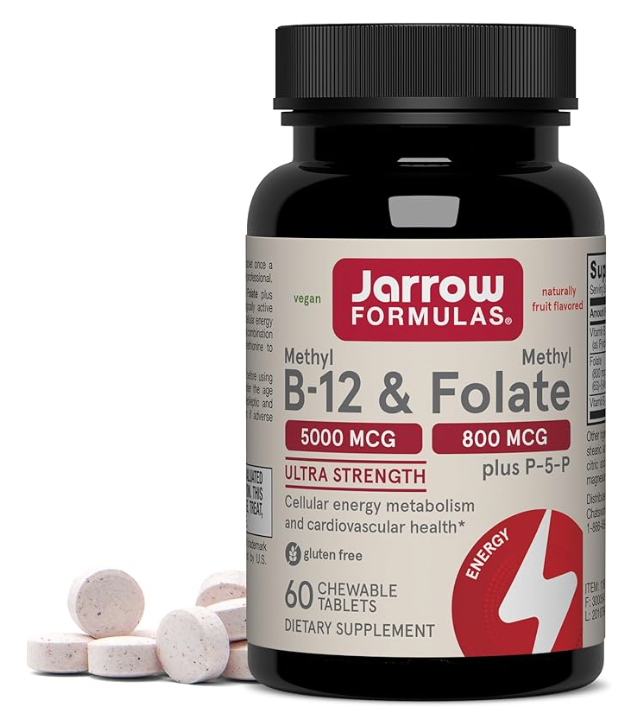
Jarrow Formulas Methyl B-12
This is a standout B-vitamin combination from Jarrow Formulas, one of the most science-backed supplement brands on the market. Each chewable cherry-flavored tablet delivers 5,000 mcg of Methyl B-12 (methylcobalamin) and 800 mcg of Methyl Folate — the bioactive, immediately usable forms of vitamins B12 and B9. It also includes Pyridoxal-5-Phosphate (P-5-P), the active form of B6, making this a triple-action B-vitamin formula.
If magnesium is the supplement that helps you sleep, B-complex is the one that helps you actually function during the day. B vitamins are essential for cellular energy production. They’re the behind-the-scenes crew that converts what you eat into fuel your cells can use. They’re also critical for neurotransmitter synthesis, which means they directly support mood, focus, and the kind of mental clarity that perimenopause and menopause have been quietly stealing from you.
Here’s why the “methylated” part matters, and why we’re specific about it. Your body has to convert B vitamins into their active forms before it can use them. Standard B-complex supplements use synthetic forms (folic acid and cyanocobalamin) that require multiple conversion steps. For a lot of women, especially those with MTHFR gene variants (which is estimated to affect roughly 30 to 40 percent of the population), those conversion steps don’t work efficiently. You’re swallowing the supplement. Your body just can’t do much with it.
Methylated forms, methylfolate and methylcobalamin, skip those conversion steps entirely. They’re already in the form your body can use. Better absorption, better results, fewer wasted capsules.
This is also a big one if you’re in the sandwich generation and running on stress and adrenaline. Chronic stress burns through B vitamins faster than normal. Your body uses them up managing the cortisol demand, which means the more stressed you are, the more depleted you become, which makes the fatigue and fog worse, which makes everything harder to manage. It’s another one of those cycles that feels like a personal failing but is actually just biochemistry.
Take one capsule daily in the morning with food. Morning matters here because B vitamins support energy production and alertness. Taking them in the evening can interfere with sleep for some women, which is the last thing you need.
5. Ashwagandha KSM-66: For Chronic Stress and a Wired Nervous System
Best for: The kind of chronic stress that lives in your body even when nothing is actively going wrong, trouble winding down at night, cortisol that won’t come back to baseline, and non-hormonal sleep support for women who aren’t ready for or don’t want HRT.
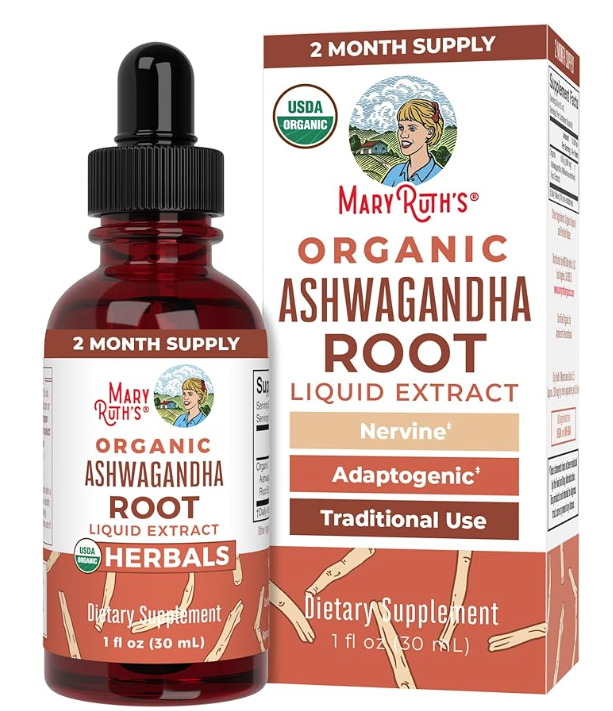
MaryRuth Organic Ashwagandha Root
This is a clean, simple, and highly regarded adaptogenic supplement from MaryRuth Organics, a trusted women’s wellness brand. Each serving (0.5 mL, taken up to 3x daily) delivers organic ashwagandha root extract to help support stress relief, natural calm, relaxation, and mood balance. The formula contains just three ingredients: organic ashwagandha root, organic glycerin, and purified water no alcohol, no fillers, and no unnecessary additives.
This is the supplement for the woman who is “wired but tired” and knows exactly what that means. Your body is exhausted. Your nervous system will not stop running. You lie down at night and your brain immediately opens forty-seven tabs. Your shoulders live somewhere near your ears. You startle at your own phone ringing. Ashwagandha is the most evidence-backed adaptogen for exactly this pattern.
An adaptogen works by helping your body regulate its stress response rather than just masking symptoms. Ashwagandha specifically targets cortisol. A 2021 randomized controlled trial found it improved sleep onset, total sleep time, and overall sleep quality in adults with stress-related sleep problems. For women carrying heavy caregiving or work loads alongside perimenopause and menopause, it can genuinely turn down the volume on that constant low-grade activation that makes everything feel like an emergency even when it’s not.
The KSM-66 distinction matters. Not all ashwagandha supplements are the same. KSM-66 is a standardized full-spectrum root extract with the most clinical research behind it. Sensoril is another well-studied form. What you want to avoid is a generic “ashwagandha powder” supplement with no standardization, because potency varies wildly and you have no way of knowing what you’re actually getting. If the label doesn’t say KSM-66 or Sensoril, keep looking.
One important note: ashwagandha can interact with thyroid medication. If you’re being treated for a thyroid condition, talk to your doctor before starting it. This isn’t a blanket scare disclaimer. Ashwagandha has been shown to influence thyroid hormone levels, and if yours are already being managed with medication, the combination needs monitoring.
Take 300 to 600mg daily of standardized KSM-66 or Sensoril extract. Many women find evening dosing works best because the calming effect supports sleep onset, but some prefer splitting the dose between morning and evening. Start at 300mg for the first week and see how your body responds before increasing.
The nervous system overload that ashwagandha targets is the same pattern we break down in Nervous System Dysregulation: Why Midlife Women Can’t Rest.
6. Black Cohosh: For Hot Flashes (With Honest Caveats)
Best for: Women seeking non-hormonal hot flash relief who cannot or prefer not to use HRT.
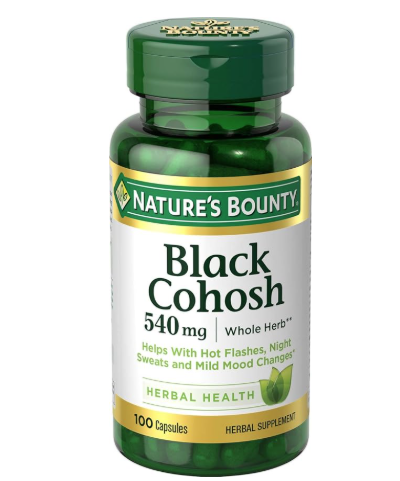
Nature’s Bounty Black Cohosh Root
Nature’s Bounty Black Cohosh Root is one of the most popular herbal supplements for women navigating menopause and perimenopause. Each capsule delivers 540 mg of whole-herb black cohosh root, a time-tested botanical traditionally used to support the unique hormonal changes women experience during this life stage. Just one capsule daily may help ease common discomforts like hot flashes, night sweats, and mild mood shifts, without hormone therapy.
We’re going to be straight with you on this one because that’s the whole point of this page. Black cohosh is one of the most widely used non-hormonal supplements for hot flashes during perimenopause and menopause. It has a long history of use. It has a reasonable safety profile at standard doses. And the evidence for whether it actually works is genuinely mixed.
Some women experience meaningful reduction in hot flash frequency and intensity. Others notice absolutely nothing after months of consistent use. The clinical trials reflect exactly this split. Some show statistically significant improvement. Others show no difference from placebo. There is no way to predict which camp you’ll fall into before you try it.
We include it here because for women who can’t take HRT, whether due to a personal health history, a medical contraindication, or a preference to try non-hormonal options first, the alternatives are limited. Black cohosh is one of the few that has enough research behind it to be worth trying rather than just hoping. That’s a lower bar than the other supplements on this page, and we want you to know that going in.
Here’s how to approach it honestly. Give it a full 8 to 12 weeks at a consistent dose before you evaluate. Not two weeks. Not a month. The research that shows positive results used longer trial periods, and the women who report real improvement typically describe it as gradual, not dramatic. If you hit the 12-week mark and your hot flashes haven’t changed, this one isn’t your answer and that’s okay. Move on without guilt. Not every supplement works for every body, and the fact that it didn’t work doesn’t mean you’re doing something wrong.
Take 20 to 40mg of standardized black cohosh extract twice daily. This is not one to megadose. Stick to the recommended range. Black cohosh is not recommended if you have liver disease or a history of liver problems, and if you notice any signs of liver stress (dark urine, yellowing skin, unusual fatigue, upper right abdominal pain), stop taking it and talk to your doctor.
7. Soy Isoflavones: For Gentle Estrogen-Like Support
Best for: Mild to moderate hot flashes and night sweats, mood support during hormonal shifts, and women who prefer a plant-based option and cannot or choose not to use HRT.
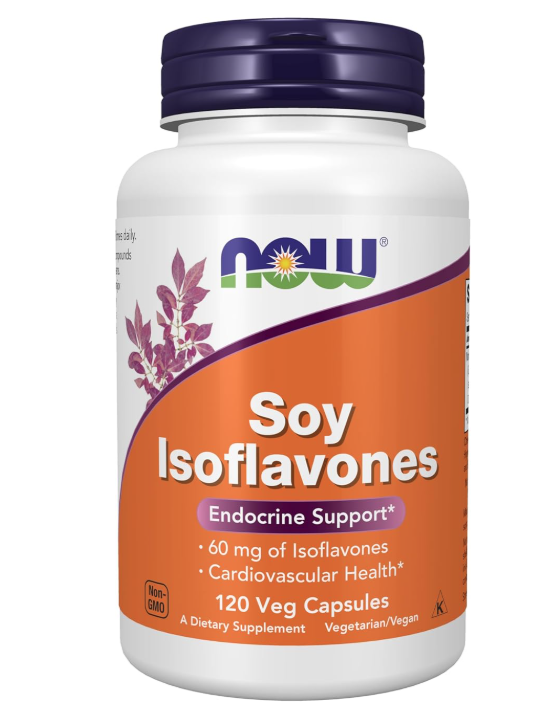
NOW Foods Soy Isoflavones
NOW Foods Soy Isoflavones delivers a concentrated plant-based source of the key phytoestrogens found in soybeans, Genistein, Daidzein, and Glycitein through a unique extraction process that results in higher Genistein levels than most comparable products. These naturally occurring plant compounds are popular among women looking for a non-hormonal way to support endocrine balance, cardiovascular health, and relief from common menopausal symptoms like hot flashes and night sweats
Think of soy isoflavones as the quietest tool on this page. They’re not going to overhaul your hormonal experience overnight. But for women dealing with mild to moderate vasomotor symptoms, the kind where you’re uncomfortably warm more often than you’d like and night sweats are disrupting sleep but not drenching the sheets, they can take the edge off in a way that’s meaningful even if it’s not dramatic.
Soy isoflavones are phytoestrogens, which means they’re plant compounds that weakly bind to your estrogen receptors. The key word is weakly. They’re not replacing estrogen. They’re not acting like HRT. They’re gently occupying some of the receptor sites that are sitting empty as your own estrogen declines during perimenopause and menopause, providing a fraction of the signaling your body used to get on its own. Multiple meta-analyses show modest but real improvements in hot flash frequency and severity. Not life-changing for most women. But real enough to show up consistently across studies.
Here’s an interesting detail worth knowing. The women who tend to benefit most from soy isoflavones are the ones who didn’t eat much soy before supplementation. If you grew up eating tofu and edamame regularly, your body has likely already adapted to processing phytoestrogens and you may not notice much difference from a supplement. If soy was never a significant part of your diet, your estrogen receptors may be more responsive to the introduction. This isn’t a hard rule, but it’s a pattern the research supports and worth factoring into your expectations.
Same honest caveat we gave you with black cohosh: this is a “try it and see” supplement, not a guaranteed win. The evidence is stronger here than with black cohosh, but individual responses still vary. Some women notice a clear reduction in hot flash frequency within a couple of months. Others feel no different. Give it a full 8 to 12 weeks at a consistent dose before you make the call.
One note for women with a history of estrogen-receptor-positive breast cancer: talk to your oncologist before taking soy isoflavones. The research on safety in this population is evolving and the conversation is more nuanced than a blanket yes or no, but it’s a conversation you need to have with your specific medical team rather than resolving on a supplement page.
Take 40 to 80mg daily. Start at 40mg for the first few weeks. Take it with food. Like everything else on this page, consistency matters more than dose size. Taking it sporadically and then deciding it doesn’t work is not a fair trial.
How to Use This Page
If you just scrolled through seven supplements and your brain is already trying to build a morning routine that includes all of them, take a breath. That impulse is your overachiever nervous system talking, and it’s the exact opposite of what your body needs right now.
Pick one. Maybe two. Choose based on whatever symptom is currently making your life the hardest. If you’re not sleeping, start with magnesium. If you’re running on fumes and brain fog all day, get your B12 and iron levels checked and start with the B-complex. If your nervous system won’t stop humming, ashwagandha. If hot flashes are the main issue and HRT isn’t on the table, try black cohosh or soy isoflavones.
Give whatever you choose a real trial. That means at least two to four weeks of consistent daily use, not three days followed by forgetting for a week followed by doubling up to compensate. Consistent and patient beats aggressive and scattered every time. Your body is adjusting to a hormonal transition that took years to develop. It’s not going to recalibrate in a weekend.
Then evaluate honestly. If it’s helping, keep it. If it’s not, drop it and try the next thing. No guilt. No sunk cost. Not every supplement works for every body, and finding what works for yours is a process, not a failure.
One more thing. If you’re on medications or managing a chronic condition, run your supplement plan by your provider before you start. Some of these interact with thyroid medication, blood thinners, or hormone therapies. Some need to be timed carefully around other prescriptions. A quick conversation now saves a complicated one later.
Not sure where to start? Supplements for Menopause Symptoms: 7 Powerful Ones That Work breaks down what each one does, how it works in your body, and how to match it to your specific situation.
Important Disclaimer: The information on Top Women’s Wellness is for educational purposes only and is not medical advice, diagnosis, or treatment. Always consult your healthcare provider before making changes to your health routine, starting supplements, or addressing symptoms, especially during perimenopause, menopause, or caregiving stress. Individual results vary; no guarantees of outcomes.
Affiliate Disclosure: Those supplement links? We might earn a tiny commission if you click and love ’em, no extra cost to you. These statements haven’t been evaluated by the FDA and aren’t meant to diagnose, treat, cure, or prevent disease. Your body, your call, your doc’s advice.
Honesty Promise: We never take money in exchange for a glowing review. If we recommend something, it’s because we truly believe it can help you, because we use it personally, not because someone paid us to say nice things. Our job is to give you the truth so you can walk “The Pauses” road with a little more confidence and a lot less confusion. You’re the boss of your wellness, promise. 💪✨